Sunday, 3 March 2024

After the Flood

 After the Flood.

I had hoped after publishing the Post "Winter dec 23" I would not have to return to the subject of the December weather. It was rain that fell on the upper reaches of the Trent at the end of December that caused the flooding at Pit Wood similar to the Christmas 2012 flood. A similar area of land was flooded this time possibly not for so long. the weather has been windy but fairly benign,  few night frosts but not much rain here, though there has been plenty further north. What I didn't realise was the extent of damage in the Rectangular field particularly to  the area of felled Alders and Poplars which I have been replanting over the previous 15 months. The area was planted with Alders and Poplars precisely because of the 2012 flood, so I can't say I am shocked. 

The log piles after some had been moved to make
a path. The pallet that can be seen on the left had
been under logs on the right hand side.

The piles of logs that had been disturbed by the local floods of Babat and Gerrit were completely redistributed by the Trent after storm Heck. The first time I went to the Tulip wood I found the triangular arrangement of pallets I used as a gate post had been overturned and the pallet used as a gate was missing. Deer had obviously been eating the Oaks. The two trail cameras which had been set in boxes on chairs had been under water, one of them was totally missing. Some tubex guards had been removed, and a lot of canes were broken, floating dead wood may have knocked them.  

Three pictures of P22 Oaks that have been grazed by deer. The one on the right has just been pruned
by them the leader having got high enough. The other two will  need additional protection and pruning.

The main problem in the Rectangular wood has been the collapse of the dead hedging which has allowed deer into the area to browse the oaks. I only found one Douglas that had been browsed. I have tried to reinforce the hedging with a bit of weaving and Robinia stakes. The old logs I am lining up against a fence line. They have to be moved and I hope they will be difficult for the deer to walk on.


The idea is that they will act a bit like a cattle grid the deer's hooves tending to slip off the round untethered tops of the logs. I will plant Eucs between some of the logs if I have spare trees in the spring. Brash can be piled on the logs as it is generated. The section photographed will get Elder from under the Alders of the nearby shelterbelt. There is no immediate hurry as the weather is a much greater threat to the new trees inside the fence. For the most part they are still in guards.

The situation in the Tulip Wood is different. The deer have just about always been able to get in many  oaks have been browsed. The flooding, high water table and strong winds mean a lot of trees are leaning badly. Unfortunately even those in second hand 1.2m tubes can be browsed if they lean a bit.

On the left Euc Pollards with dying new regrowth, frost?
On the right older regrowth affected by thrips.
The leaves are also in poor condition, caused by flood?  

The worst affected wood is the lowest lying, The Triangular Field several Eucs have fallen over, including pollards that have ideal multi-stem regrowth. A number of pollards with multiple one years regrowth appear to be dying. They may have been frosted or it may be flood related. The former is suggested as areas that were less flooded are also affected.    

The blown E. rodwayi 

It is my intention to fill in any gaps that may appear at the triangular wood with E. rodwayi because as a swamp gum it is more wind firm. It is also more frost tolerant but slower growing. I still will, but I have just found the first P11 Rodwayi to be blown down. Fortunately the crown fell on the ditch side ride, while the trunk bisected other Eucs, so no collateral  damage. The continuously sodden ground has meant that high winds still bring down Eucs in the triangular wood.

The epicormic growth that follows pollarding is less well secured to the trunk and rot working down from the cut surface means that pollards are more likely to loose limbs from the trunk. Pollards with one regrowth stem appear to be more susceptible. They have a large area of the cut growth which is dead allowing rot in. They are more lopsided and may have less photosynthetic potential to combat infection. They are also more exposed. Though the log is useful.
Two of the most successful pollards have been toppled though both had a previous lean. By successful I mean they had a number of regrowths that were long straight and up to 6" max diameter so did not need splitting.
A low pollard in the autumn, felled in winter after root plate lifted, cord logs from it.


 The saturated ground has had another  detrimental effect. All the E. glaucescens and E. rodwayi I have planted over the winter appear to have died.  The glaucescens are known not to like waterlogging but the rodwayi are swamp gum and must be able to withstand waterlogging at least when established. They have done well in the triangular field which is where some have gone in and is much wetter than the rectangular field where they have also failed. I wonder if the failure of some E. dalrympleana and viminalis that have also failed in the rectangular field may have failed becaus of the water logging rather than the frost I initially blamed.


Monday, 26 February 2024

Chestnut Article

 Chestnut Article

This is a rough Copy of an article I wrote for the Quarterly Journal of Forestry. The article actually contains more Photos.

If the Romans Did Not Bring Sweet Chestnut to Britain, Who Did? John Pitcairn looks into this intriguing question following a throwaway remark at the 2023 Whole Society Meeting. 

At the recent excellent Whole Society Meeting hosted by the South Eastern Division, we saw exemplary sweet chestnut coppice silviculture and were introduced to its economic and cultural importance. At one estate the host, in an almost throwaway remark, said that a Dr Robin Jarman had made a convincing case for the Romans not being responsible for the introduction of sweet chestnut into Britain and that the first evidence for it was from the 6th or 7th century. This, according to my schoolboy history, was when the Jutes, Angles and Saxons arrived from Denmark and northern continental Europe. These are not areas I associate with sweet chestnut, and a Roman introduction seemed more likely to me. I realised I had no idea what evidence there might be and decided to do some research online. It was an interesting idea to explore and focussing on papers that were freely available I quickly located and downloaded a thesis ‘Sweet chestnut (Castanea sativa Mill.) in Britain: a multi-proxy approach to determine its origins and cultural significance’ by Robin Andrew Jarman (Jarman, 2019). I did read all 57 pages of text but not necessarily the seven pages of references! I thought readers might appreciate a summary of what I discovered. 

Fortunately, the introduction did explain the importance of determining the date of sweet chestnut’s arrival, which I thought interesting but unimportant. Whether sweet chestnut is indigenous, an archaeophyte (an ancient introduction) or a neophyte (a modern one) is a significant question. The question relates to its naturalness, a key function in the Nature Conservation Review 1977 which determines which species should be protected or regarded as invasive; this might become relevant should sweet chestnut blight take hold in this country. 

 The aim of the thesis was to determine:

 When is the earliest verified date for sweet chestnut growing in Britain?

 Whence do the longest-established British sweet chestnut trees derive? 

Does new evidence for antiquity and origins alter the ecological and cultural significance of sweet chestnut in Britain? 

 King’s Wood near Worksop, Sherwood Forest, Sweet Chestnut originally planted
 by the Dukes of Portland.

 I  shall just cover the parts relevant to sweet chestnut’s arrival and any information as to where it may have come from, considering what the evidence is and why Dr Jarman cast doubt on it. The debate on the origin of British sweet chestnut has a long history. John Evelyn considered it non-native and in his 1706 4th edition of Silva suggested a Roman introduction. This became the consensus view of the Royal Society in the 18th century but lacked evidence. Oliver Rackham believed sweet chestnut to be a Roman import, or so I thought. Dr Jarman reveals he worked with Rackham on and off from 1971, and that Rackham had reservations about the species being a Roman introduction. The idea was being quoted and requoted in an academic echo chamber without the primary evidence being checked. It became a ‘factoid’ as Rackham called it (something everyone believes but is not, in fact, true). As I am taking what Dr Jarman has written at face value, I may be contributing to a new ‘factoid’! Dr Jarman has tried to re-examine original archaeological material and interview the researchers. He also visited semi-natural woodlands as well as ancient chestnut trees both alive and dead, to establish its cultural and social significance. A literature review was undertaken, and archaeological archives were reviewed looking for pollen, charcoal, nuts, and timber references prior to 1350 AD. An attempt was made to locate all recorded archived specimens up to 650 AD and to re-evaluate their authenticity with modern techniques. This was carried out in partnership with English Heritage. The thesis was essentially a summary of a number of previously published papers that Dr Jarman had been involved with, usually as lead author. The thesis is divided into four sections: (1) archaeological records, (2) dendrochronology, (3) genetics, and (4) historical ecology. What follows is my understanding of the key points Dr Jarman makes grouped into ‘archaeological records’ and then a combination of the last three sections of his thesis.

 Archaeological records.

 Dr Jarman located 35 archaeological records of archived sweet chestnut material from before 650 AD, i.e. the Roman and post-Roman period. He tried to find and re-examine them physically. For me, the most striking finding was that there were no confirmed records of sweet chestnut pollen prior to 650 AD. There were only two reports of archaeological records of sweet chestnut nut fragments in the pre-medieval period. One was from an excavation at Great Holts Farm in Essex in the 1990s. The find consisted of five fragments of chestnut pericarp found in a Roman well that had been filled with rubble and rubbish. The waterlogged bottom of the well contained organic material including “a few fragments of sweet chestnut nut pericarps, walnuts, hazelnuts, olive stones, grape pips, stone pine nuts, cherry stones, sloe, bullace and apple pips.” Some of these items must have been imported, for what looks like feasting. This cannot be considered good evidence for a local source of chestnuts, not that it had been claimed to be. The other reported sample, from Castle Street in Carlisle, was radiocarbon dated to a much later period. Reports of the sweet chestnut charcoal remains also proved problematic, in part because many of the recorded archived pieces could not be located. There was also a degree of misidentification. Samples recorded as sweet chestnut turned out to be ash or alder, but mainly oak. Small pieces, particularly small branch wood, may be indistinguishable from oak. Oak can confidently be distinguished from sweet chestnut by the presence of multiseriate medullary rays. The problem is that the absence of rays particularly in a small fragment is not proof it is chestnut. Creating fresh surfaces for examination was not possible due to the importance of the specimens. The dating of some samples could not be verified or was confirmed to be inaccurate. Some key samples were from 19th century excavations and their accounts had been regularly requoted but had not been questioned. Reported wood and wooden artefacts were confirmed; however, a writing tablet or a tool handle could easily have been imported. There are waterlogged chestnut stakes and piles from the Alverstone Marshes on the Isle of Wight, which have been carbon dated to the 6th and 9th-10th century, but this study had not been published when Dr Jarman put his thesis together in 2019. There is a possible sweet chestnut pollen grain from Uckington, Gloucestershire that is dated to the 7th century. This with the Alvestone Marshes wood could be the only physical evidence of sweet chestnut products that could have been derived from plantations established in the Roman period. In summary, no definitive archived material could be found to confirm locally grown sweet chestnut in England and Wales during the Roman and immediate post-Roman period. 
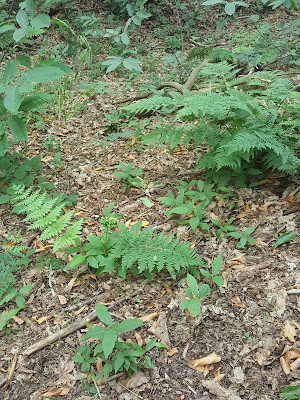
Sweet chestnut regenerates freely.

Historical ecology/genetics/ dendrochronology.

 The earliest written record for growing sweet chestnut is in the 12th century (1113 AD), from legal ecclesiastic documents near the current Forest of Dean. It must, therefore, have been established in the 11th century at the latest. There are a number of large ancient sweet chestnut trees on estates and in former deer parks, some shown to be more than 400 years old. Dendrochronology does not take any sweet chestnut back more than a few hundred years; DNA analysis has confirmed ancient clonal coppice stools but provides no date. DNA might provide evidence for where introduced sweet chestnut originated and so provide clues to who introduced it. DNA analysis has been carried out on British and Irish sweet chestnut for comparison with European records. Sweet chestnut along with other flora retreated to refugia ahead of the ice sheets of the Ice Ages. 

Three refugia genepools have been identified. An eastern (E. Turkey and the Caucasus), a central (W. Turkey, Greece and part of the Balkans), and a western (Italy, Spain, Portugal and southern parts of France and Switzerland). DNA samples from England and Wales are from the western area but they represent two separate genepools. These genepools are geographically mixed, suggesting at least two substantial introductions. The older British DNA samples showed some commonality with samples from Portugal to Romania. It is a diverse genepool but whether that is because of multiple introductions or because of mixing on the continent prior to introduction cannot currently be determined. Ancient parkland trees usually came from NW Iberia while plantations <200 years old were more likely to be Italian; one can imagine members of the gentry returning from their grand tour with pockets full of chestnuts! Sweet chestnut does not inform British myth or legend but is often planted in parks or gardens in significant places. It is of considerable economic and practical importance. One of the reasons for calling sweet chestnut an ‘honorary native’ is that it forms ecological associations within semi-natural woodlands, which have been stable for hundreds of years. They are also similar to forest vegetation associations on the continent. My initial reaction to the lack of pollen evidence may have been misplaced. British sweet chestnut pollen samples are very rare from the whole medieval period, Sweet chestnut produces viable seed and naturally regenerates. “If the Romans made a concerted effort to introduce sweet chestnut, there is evidence they failed!” 

Wednesday, 24 January 2024

Cairn Chipping.

 Cairn Chipping.

The decision to fell the P7 Eucs required the felling/coppicing of the willow that grew amongst them. These were surviving original Salix triandra and together with S. purpurea, Salix viminalis, and other willows I put in to use the space when it was clear most of the Eucs had not survived the winter of 10/11. This generated a lot of rubbish brash. I did not want to chip back into wood as a mulch. I thought the Oxygen demand from the rotting chip would exacerbate the affects of winter waterlogging on the wet clay. Burning wet brash next to the A1 is not really an option. So it was piled for chipping. I also took out a lot of S. triandra and non timber scrub from the wild wood. This was piled and was more out of the way but having decided to pay for chipping was there to make it worth while for a days chipping.

Piles of brash waiting for chipping at Cairn Wood.

  After a long wait Chris Willatt and his father in law came and did the chipping with me. 

All the piles of brash at the far end  were chipped as well as some willow from the other end. We finished as light fell four loads of chip went to Simon Ward's yard. At least 10 cubic meters I estimate from the size of the pile. I failed to photograph the pile before it was pushed up with the rest so must remain a guess. A successful day.

Sunday, 7 January 2024

Winter dec 23

 Winter 2023.

Summer 2023 was reasonably wet after a dry spring, soil moisture was comparatively high by the end of September.

Mid October Storm Babat struck. The Trent had not been particularly high and the woods were not badly flooded. The shelterbelt ditch must have risen as the bridge logs had been displaced. Bob Beard's field by the green lane was submerged and as I write on new years eve it still is and has been at least half flooded since October. There have been several storms since October and Babat produced the worst local flooding in Carlton. The Trent has since risen and flooded the Holmes so it can be seen from the bathroom, after a few days when the Trent went down it can now be seen again.

It was apparent that there had been weather issues at Pit Wood when Ben and I went down just before Christmas. The Ash by the gate had blown down and the piles of logs ,Poplar and Alder that are now going to waste, had collapsed. Moving to the triangular field it was obvious that a lot of Eucs had been blown over. These were mainly the viminalis and were leaning on other trees though some had the whole root plate exposed and water could be seen in the holes.


I had thought to post this blog at New Year, however storm Henk arrived to spoil some New Years eve parties. On New Years day the two large Ash on Holme lane had blown down and joined the one by Holme Lane gate on their sides.
The fallen Ash in Triangular wood, actually half a twin trunked tree, and the one in the rectangular field 

The one by the gate had had huge dryad saddle brackets. The photo is from May 2022. You will have to take my word for that in 2023 they were much bigger. The crown looked reasonably healthy but most of the trunk was rotten. The fallen tree in the triangular wood was half of a twin stemmed Ash. Either two trees or coppice regrowth of a very young tree. The normally dry ditch under the trunk was fairly full and may have contributed to the fall. The trunk of the tree in the rectangular field  was rotten the rot appears to have entered through an area of bark that was grazed off by rabbits or squirrels about 10 years ago.
The wind of Storm Henk may have been New Years Eve but the rain it dumped in Staffordshire and Derbyshire arrived in Nottingham on Jan 5th. Nottinghamshire county Council declared an emergency for flooding from the Trent.
I went to see the wood on the 5th The end of the Lane Brotts Road and the most of the layby were under water. This was flooding caused by the Trent coming over at Dunham Bridge. The two previous flooding events Storm Babat and storm Gerrit were when the Trent was a bit lower and caused by local rainfall, and were associated with Grassthorpe flooding.  The flooding was a bit worse on the 6th  after two days of no Rain. The Trent peaked at Muskam around midday but was still steady at Carlton at 9 in the evening when it was 9cm above the record level at Torksey. This event is similar to Christmas 2012 when Dunham Bridge was closed for several weeks. The triangular field was flooded for a week and the area of the rectangular field planted with poplar and alder for a while. The forecast for  the first part of January is now cold, calm and dry. I have decided not to risk driving through floods, or walk down Holme Lane which has extreme pot holes. 
The river level reached 11cm. above its previous record at Torksey on the 7th at 2:15pm. At about that time the water in the Brotts lane lay-by had gone down by a few inches.


Monday, 18 December 2023

Eucalyptus Pollarding.

Eucalyptus Pollarding.


All the areas have a percentage of Eucalypts planted to provide fuel logs. As with all the trees I pollard initially. This is because I want to be standing up when a tree falls and not on my knees. The management plan says I will fell when they are 8" DBH. This does not always happen but makes sense. Eucs can be hard to split particularly if they are large branched and become impossible when dry. The main problem is bringing them down without damaging other trees and providing logs than I can use.

Regrowth of pollarded Euc stumps, along with thin stemmed trunks left in rectangular Euc block.
Sept 2023following felling the precious autumn.

Pollarding has several advantages. It keeps regrowth from the top out of reach of deer. It maximises the area from which epicormic growth can grow to sustain the root system. It also raises the regrowth above the herb layer and in amongst other trees may lift them out of their densest shadow. A pollard stump can always be removed later.
In fact coppiced stumps had a lower regrowth success rate. I think because they were more heavily shaded and had a smaller leaf area. I like to fell above an epicormic shoot if possible. An established shoot can feed the root system while the canopy is lost and supresses the number of new epicormics that grow. Most clean stems produce a large number of thin shoots which don't reach sufficiently into the light when surrounded by other trees. If a few shoots do dominate then then they will self prune. Multiple  weak shoots are more susceptible to frost and drought and therefore failure.

A viminalis which has half fallen in the
 triangular field. There is good epicormic
 growth. They will be left when the tree is felled. 
My aim is to produce regrowth that is about 6 " in diameter and as long as possible. This is because it produces logs that don't need splitting are straight and are easy to cut and move. I think logically the timing of the felling will affect the way the stump regrows and therefore its success. The species must also have an affect but I fell throughout the year as opportunities arise and do not keep adequate records to comment.  
Felling of Eucs that are in intimate mixes is determined on size and to do a minimum amount of co-lateral damage. There are small areas particularly at Cairn wood where there are nearly pure but poorly stocked stands. I initially singled the coppice regrowth of the trees that survived the 10/11 winter to provide fuel for  2021/22. I am now refelling as they have some recovery regrowth. They are only small blocks 6-10 trees and I hope they will go to a merchant so I don't have to process them there will be enough fuel for myself mainly from Pit wood. It is easier to fell groups of trees and there is then more light for the regrowth.
The triangular wood has had very high water table levels since storm Babat in mid October and now (mid Dec 2023) it has standing water over most of it. I am expecting many Robinia and conifer to die. They will be replaced by Eucs mainly the swamp Euc Rodwayi if suficiently open. The problem with the Eucs in the triangular wood is that they can get blown over when the water table is very high. Though no E. rodwayi have been blown over....yet.
 

Sunday, 19 November 2023

Dutch Elm Disease

 Dutch Elm Disease.

Dutch Elm Disease (DED) is one of the few tree diseases that most people have heard of. The first clarification that is needed is to say it did not come from the Netherlands. The epithet Dutch comes from the fact that the causal fungal agent was first identified there in 1921. The first  European description of the disease was also in the Netherlands in 1905. It probably has an Asian origin.

Larval galleries on dead 6" diameter
trunk. Dead Elm provided fuel when I 
first got the field.

There are three species of ascomycete microfungi in the genus Ophiostoma recognised as causing DED. O. novo-ulmi being the most virulant. This was introduced to Britain in the 1960's from Canada via Rock Elm imported through Bristol docks. Most large Elms had died by the end of the 1970's. The fungus is spread by bark beetles whose larvae eat the nutritious cambium layer the area where stem width growth takes place. The Large Elm Bark Beetle is a strong flyer and spread was rapid. The trees try to contain the Fungus by blocking water conducting tissues. The larvae  also interfere with the movement of water and nutrients within the tree. A die back type disease is formed where the ends of shoots where the water has furthest to go deteriorate and die. Eventually  the trunk gets girdled so all the tree upstream of the girdling dies. The fungus can keep spreading down into the roots which eventually die.

An original stump, there were also several dead secondary trees.
There have also been trees lost since.
                                     When the Cairn Wood field was bought in late 2006 there were Elms along the stream side about half way along near where a ditch joins the stream forming a field boundary on  the other side. There was a long dead stump from a large Elm on which the larval galleries of the beetle were visible. The stump has  weathered and is much reduced but does illustrate the durability of Elm timber. There were smaller Elms for about 50yrds either side of the stump. These were presumably suckers and the dead tree an English Elm. See Elm Species

An Elm hedge beyond Weston. A hedge which has not 
been cut regularly. As the plants reverted to
 hedge row trees they have died.

 The English Elm was a common hedge forming species. It can be cut back hard and as it suckers naturally fills in gaps and provides planting material for other hedges. Elm hedges could be identified by the large dead hedgerow trees sticking out of them.  Parts of the the hedge between Normanton and Normanton crossing were like that when I came to Sutton. The dead trees have now gone, but the hedge remains. There are lots of Elms at the Carlton cross roads end of the road to Ossington. Some are dead but small diameter ones survive. There is a large (Wych?) Elm in Kneesall which has not been affected. 

The White Elm in Cairn Wood.
Photo start of November 2023.
There is a White Elm currently unaffected in Cairn Wood near the stream at the far end. It came from Esmond Harris and was planted about 2009. The same time as the Oaks near it. It is very much bigger than them. Part of the hedge on Carlton lane opposite the track to the Rhymes is Elm. It is regularly cut and though there have been dead hedgerow trees in it it is sound. It was also the first place I found signs of  Elm Zig Zag Sawfly.
The reason that hedges survive while trees fail is simple the beetles do not lay their eggs on small diameter wood. This may be because the burrowing larvae would girdle and kill a small branch before maturing. It takes several generations to kill a large tree. The fungus can also spread into the roots and infect conjoined trees. 


Tuesday, 10 October 2023

Robinia


 Robinia Part 1.

Following the discovery of an extensive Robinia sucker network I need to make a decision on what to do with the Robinia I have planted and the 150 or so seedlings I have. They are the largest non Eucalypt trees I have and make up a fair proportion of the trees in the triangular and rectangular fields. It is also a good nitrogen fixing tree.

There is a large Robinia on the right.
A smaller sucker can just be seen on the left. 


The problem is they are potentially invasive. They have been a problem in the Mediterranean.  The Forestry Commission ban them. One of the reasons I planted them was that there are large Robinia in the village a similar distance from the Trent and I was not aware of any spreading issues. Robinia is a mainstay of many Eastern European commercial forests serving the market Sweet Chestnut does here.


There have been a couple of suckers elsewhere they grow straight and fast. As there were only a couple I let them be. I did stake this one thinking it could make a fine tree. I decided to dig out the base to see if it was a sucker or a seedling. If a seedling then it could spread into the neighbouring fields. 

I got quite a shock a small root 1/2" diameter came in from the parent tree and a 2" root went on under the Holly hedge. There was a sucker the other side of the hedge one of the reasons for  the investigation. The energy the sucker produced was presumably not required by the parent tree and was used to produce more trees. It also explained why the Sucker was difficult to keep upright.
What was worrying was the sucker was 8 yards from the parent tree and the suckers off it were a further 8 yards away.

There is currently no U.K. derived Robinia market. It is used extensively for outdoor joinery particularly play equipment. It is imported pre processed from Eastern Europe.

I think I shall keep it. It makes excellent fuel and it could be a timber. I shall keep it at least 6 meters from boundary rides and spray suckers. Hoping for the best! 

24/5 planting update

  24/5 Planting Update. The area next to the willow coppice. which was predominately 3/4 rows of ash and 1/2 rows of Italian Alder and Hornb...